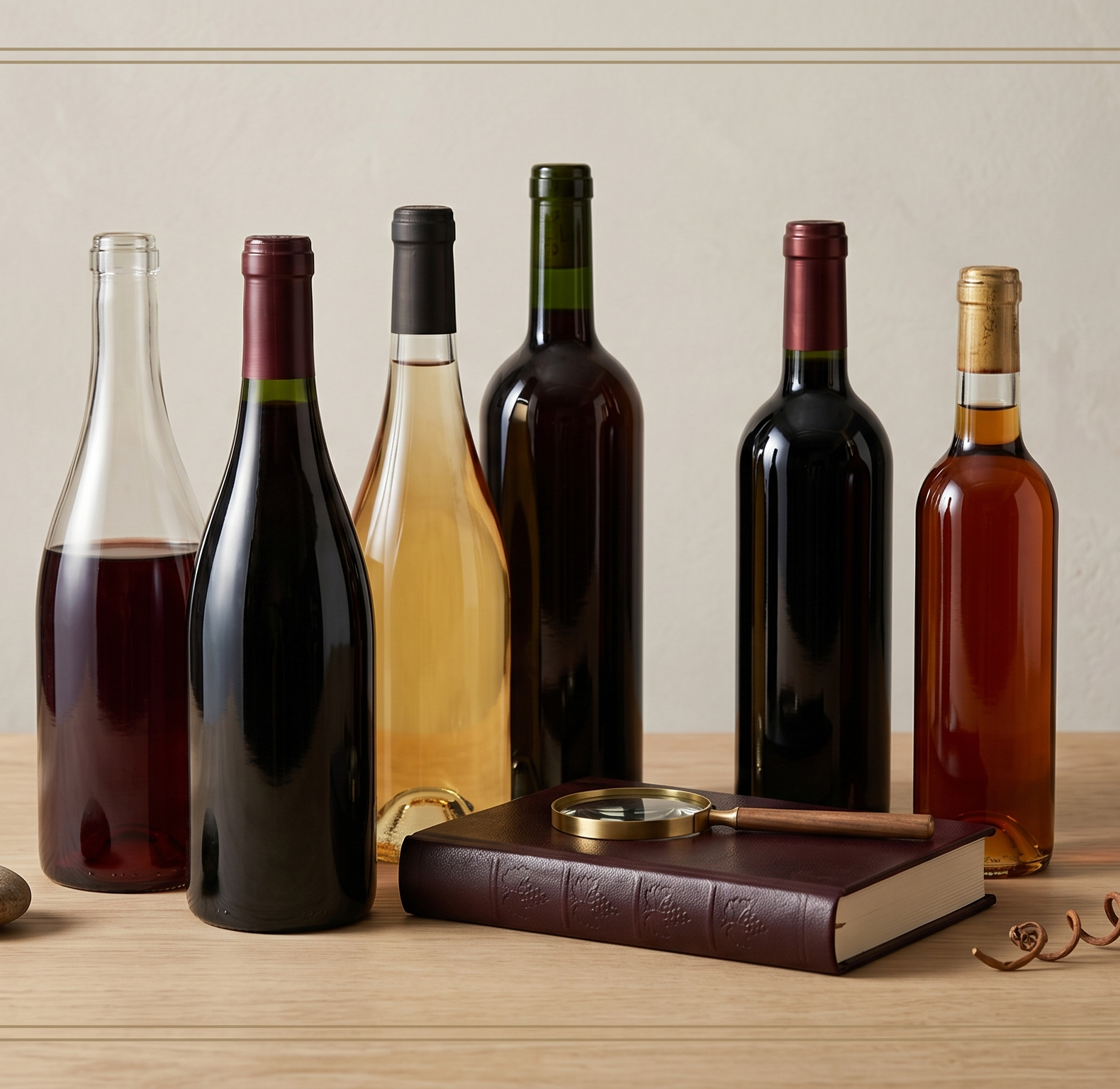
The barrier nobody talks about
There's a quiet reason many people who love drinking wine never start collecting it: they feel they don't know enough to begin. Wine carries an intimidating reputation — a sense that there's a vast vocabulary to master, regions to memorise, and a right and wrong answer to everything, all policed by people who seem to have been born knowing it. So the bottles stay at the shop, the cellar stays a "someday" idea, and a genuine source of joy goes unexplored.
That's a shame, because the intimidation is mostly a myth. Wine isn't an exam. It's a pleasure that happens to reward curiosity, and you can begin with almost nothing — a few bottles, an open mind, and a little patience. Everything else is learned by doing, one glass at a time. This guide is for anyone standing at that threshold, wondering if it's for them. It is.
Start with what you already enjoy
The single best place to begin a collection is your own taste. Forget, for a moment, what's prestigious or what you "should" like. Think about the wines you've genuinely enjoyed — a style, a grape, a region, even just "the red my friend poured at dinner." That's your starting point, and it's a perfectly good one.
From there, collecting is simply organised curiosity. You buy a few bottles in and around what you already like, you try them, you notice what moves you, and you let that guide the next few purchases. A collection isn't built in a weekend; it accumulates as your taste sharpens. The early goal isn't a grand cellar — it's learning what you respond to, which is knowledge no expert can hand you.
A few gentle fundamentals
You don't need to master wine theory to begin, but a handful of ideas make the journey smoother, and they're easy to absorb.
Grapes and regions are the two big organising forces — the same grape tastes different depending on where it's grown, which is most of what makes wine endlessly interesting rather than complicated. Wines also change over time: some are best enjoyed young and fresh, while others reward patience and improve for years, which is the whole romance behind cellaring rather than just buying. And storage genuinely matters — wine is sensitive to heat, light, and temperature swings, so even a modest collection benefits from a stable, dark, cool place to rest. None of this needs to be memorised up front. It's context that makes more sense each time you open a bottle.
Build your palate by paying attention, not by studying
Here's the reassuring truth about "developing a palate": it happens almost on its own, as long as you pay a little attention. You don't need formal tasting training. You need to notice — was this lighter or richer than the last one, did you like the way it felt, would you buy it again — and, crucially, to remember what you noticed.
That last part is where most beginners quietly stall. You try something wonderful, mean to remember it, and three months later can't recall the producer or why you liked it. The learning leaks away. Keeping even rough notes — what you drank, when, with what, and what you thought — turns scattered sips into a real education. Over time those notes become a map of your own taste, and the map is the whole point. Wine, like art, can be enjoyed purely intuitively — but the pleasure deepens enormously when a little knowledge is brought close to the experience.
How technology changes the learning curve
This is where the journey has genuinely changed. The things that used to make wine intimidating — the memory work, the record-keeping, the not knowing what you have or what to drink — are exactly the things technology is good at carrying for you.
A good wine app can identify a bottle from its label, tell you about the producer and the region, suggest when it's best to drink, and hold your tasting notes so they don't evaporate. Inventory tools let you see your whole collection at a glance — what you own, what's ready, what you paid — so nothing gets forgotten at the back of a rack. And the smartest systems go further, offering guidance: what to open tonight, what suits the meal, what to try next based on what you've already enjoyed. Used well, technology doesn't make wine less personal or less romantic. It removes the friction that was keeping you from the romance in the first place, and it shortens the path from curious beginner to confident collector.
Learning through your own collection — the Uva idea
Here's the shift worth dwelling on. Most wine education asks you to learn in the abstract — study regions and grapes you may never drink, memorise facts detached from your own glass. It's backwards, and it's why so much of it doesn't stick. You learn a language best by speaking it, and you learn wine best by drinking the wine you actually own.
This is precisely what we built Uva Cellars to do. Think of it as something like a Duolingo of wine — a gentle, daily way to learn through your own collection rather than a textbook.
Our Smart Sommelier™ tells you about the wine you're actually drinking as you drink it, nudges you to try bottles already sitting in your collection, suggests what you might explore next, and helps you grow your collection in directions that suit your taste. And Palate IQ™ learns you over time — what you reach for, what delights you — so the guidance gets more personal with every bottle, turning each pour into a small, painless lesson.
The effect is that your collection stops being a passive store of bottles and becomes a living teacher. You're not studying wine; you're enjoying it, and learning naturally as you go — which is exactly how it should have worked all along. (It's the same philosophy behind a truly smart cellar: the knowledge and the wine, finally in one place.)
Just begin
If there's one thing to take from this, it's that you are far more ready to start than you think. Buy a few bottles around what you love. Pay attention. Keep track of what you enjoy. Let curiosity, not pressure, set the pace. The expertise you're worried about lacking is something you build by collecting, not something you need before you're allowed to start.
And when you're ready for your collection to teach you as you go — to tell you about what's in your glass, prompt you toward the bottles you'll love, and turn collecting into the joyful, unintimidating journey it was always meant to be — that's exactly what Uva was made for. We give your collection more meaning, right from the very first bottle.
You don't need to know wine to begin. You need to begin to know wine.